


Veryable: Work. Next Day Pay
4.34.13K Reviews
App Specs
- Version
- 7.0.4
- Updated On
- License
- Free
- Downloads
- 1,000,000+
- Developer
- Veryable, Inc.
- Categories
- Business
- Platform
- Android, iOS
Screenshots
 Analysis by AppCompare
Finding flexible work is usually harder than finding a job advertisement. A listing may look suitable, yet the schedule, commute, payment timing, and actual day-to-day tasks can make it a poor fit. Veryable: Work. Next Day Pay takes a different approach by focusing on short-term work opportunities, flexible scheduling, and a quicker path from accepting an opportunity to getting paid. After using it as a business app, I see its main value less as a replacement for a traditional job and more as a practical tool for people who need control over when they work.
My overall view is positive, with an important qualification: this is most useful when you are comfortable choosing work one opportunity at a time. The app can help someone fill gaps in a changing schedule, build experience, or find a route into operational work. It is less convincing for anyone who needs guaranteed hours, predictable weekly income, or a conventional hiring process with long-term security.
How Veryable fits into everyday work decisions
I use this section to frame Veryable as a choice about how much control—and uncertainty—I want in my workweek. The key is to judge each opportunity against my real constraints, especially travel time and commitments that cannot move, rather than treating flexibility as an automatic advantage. From there, it becomes easier to see where the app’s approach is a better fit than more conventional ways of finding work.
A marketplace built around flexibility rather than fixed shifts
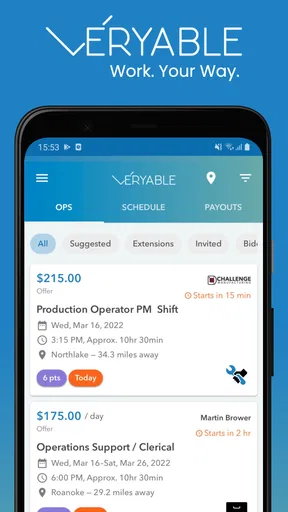
Veryable, developed by Veryable, Inc., sits in the Business category, but it feels more practical than many office-oriented business tools. Its purpose is connected to finding and managing flexible work opportunities. Instead of asking users to commit immediately to a permanent schedule, the app is designed around selecting work that fits a person’s current availability and skills.
That distinction matters. A standard job board is mainly a search engine for vacancies: you browse, apply, wait, and possibly attend an interview. Veryable is more useful when your question is, “What work can I take on around my existing responsibilities?” That could mean fitting work around school, another job, family commitments, or a period between permanent positions.
I found the flexible approach appealing because it changes how I think about availability. Rather than promising that I can work every weekday, I can consider individual opportunities based on timing and suitability. The trade-off is that flexibility works both ways. The app may help you find work that fits your schedule, but it does not turn variable work into a guaranteed timetable.
The store summary highlights flexible scheduling, exclusive perks, daily pay, and skill building. In practice, those ideas are connected. Flexible scheduling is useful only when the opportunities match your capabilities and travel limits. Faster payment is valuable only if the work itself is worth accepting. Skill building matters most when you use each assignment deliberately instead of treating every opportunity as interchangeable.
Worth Reading Before You Choose

EA SPORTS FC Mobile 26 Is a Bigger Football Game, but It Takes Time

Flipboard Shows What News Apps Must Do Beyond the Feed

Switching to Android Auto Means Rethinking Your Driving Routine

Google Calendar Makes a Crowded Week Easier to Manage

Ludo King Makes the Most of the Minutes Between Plans

Baby Panda World Brings Quick Play to Modern Phones, but Its Game Library Feels Busy
Why the next-day payment angle changes the decision
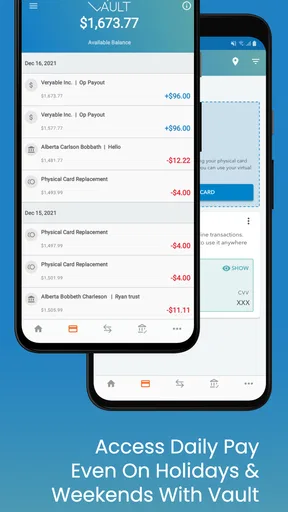
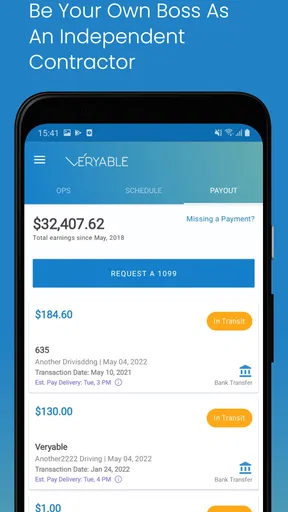
The payment timing is one of the strongest reasons someone might try this app. When money is tight, waiting for a normal payroll cycle can create real pressure. A work platform that emphasizes getting paid the next day can be more relevant than a traditional job board, even if the individual opportunity is shorter or less predictable.
I would still approach this feature with a practical mindset. Faster payment does not automatically mean higher earnings, and it should not be the only reason to accept work. Before committing, I would consider the full cost of getting there, the time spent on the assignment, and whether the task develops a skill I can use again. A short opportunity with a long commute may look attractive until those details are included.
My most useful habit would be to compare each opportunity against a simple personal checklist: start time, expected duration, travel, physical demands, required experience, and how the payment fits into my immediate budget. The app can make work easier to discover, but the final decision still belongs to the user. That is an important distinction for anyone expecting the platform to calculate the best option automatically.
The practical value of skill building
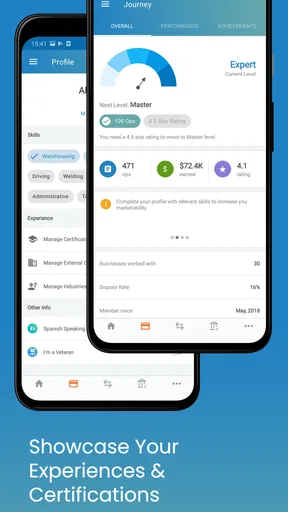
Skill building is another reason the app can be more than a temporary income tool. Someone entering warehouse, manufacturing, logistics, or other operational work may benefit from seeing different types of assignments and learning what suits them. Even when an opportunity is not a perfect long-term match, it can provide useful information about preferred tasks, schedules, and working environments.
I see this as a gradual process rather than a formal course. The app should not be treated like a classroom with a complete qualification path. Its stronger role is helping users gain exposure through real work. That can be especially useful for someone who knows they want practical employment but has not yet decided which type of role is sustainable.
A smart workflow is to keep private notes after each assignment. I would record what the work involved, how demanding it felt, whether the schedule was realistic, and which skills I used. Over time, that makes the app more valuable because I am not merely accepting opportunities; I am building a clearer picture of where I perform well. This is one of the less obvious ways to turn a flexible-work app into a career-planning aid.
What the app feels like for a user with changing availability
Imagine someone whose regular hours have been reduced and who needs income while looking for something more stable. On a Sunday evening, that person can review upcoming opportunities, check which ones fit around appointments, and choose work without promising availability for the entire week. If the assignment goes well, the next-day payment focus may help with immediate expenses while the user continues searching for a longer-term role.
Another realistic case is a parent with a changing childcare schedule. A fixed part-time position may be difficult because missing one recurring shift can create conflict. Flexible opportunities may be easier to consider, provided the start and finish times are genuinely compatible with childcare and travel. In that situation, the app’s value is not simply “more jobs”; it is the ability to make smaller commitments.
There is also a useful case for someone testing a new line of work. Instead of leaving a current job immediately, the person could use suitable opportunities to learn whether operational work feels right. That reduces the risk of making a major career change based only on a job description. The limitation is that this approach requires careful scheduling and enough financial breathing room to handle variation.
Where it beats ordinary job boards
Compared with a conventional job board, Veryable is more focused on immediacy and flexibility. Traditional listings are better when I want to compare permanent positions, read detailed employer information, prepare a formal application, and pursue a stable career ladder. They can also be easier for evaluating salary structure and long-term benefits when those details are clearly presented.
This app makes more sense when the priority is finding work that can fit into the next part of my schedule. It reduces the distance between searching and making a practical decision. That is a meaningful advantage for users who cannot wait through a lengthy recruitment process or who do not want every opportunity to become a permanent commitment.
Compared with general gig platforms, the distinction is more nuanced. A broad gig app may offer many kinds of tasks, often centered on deliveries, errands, or independent services. Veryable is better suited to people interested in operational work and structured assignments rather than constantly managing customer requests or driving-based tasks. The better choice depends on the kind of work you want, not simply on which app promises faster access.
Traditional staffing agencies may still be preferable for someone who wants personal guidance, a consistent placement, or help understanding workplace expectations. Veryable offers more direct control, but that control also means more responsibility. You need to judge opportunities, manage your availability, and decide whether the work fits your longer-term plans.
Small decisions that make the experience better
The first practical tip is to treat your profile and availability as working tools, not one-time setup steps. If your schedule changes, update it promptly. A flexible platform is only useful when the information behind the matching process reflects reality. Marking yourself as available when you are not can create avoidable stress and may lead to rushed cancellations or travel problems.
The second tip is to separate “can technically attend” from “is genuinely worth accepting.” If an opportunity starts just after another commitment ends, the schedule may appear possible but leave no room for delays. I would build in travel and transition time rather than planning as if every appointment ends perfectly on time.
The third is to use the app as a filter for learning, not only earning. If two opportunities are similarly convenient, I would favor the one that exposes me to a useful process or skill, assuming the conditions are suitable. That can make flexible work more valuable over several weeks, particularly for someone trying to move toward a more specialized role.
A fourth insight is to watch for pattern recognition. After using the platform for a while, you may notice that certain start times, assignment types, or travel distances consistently work better for you. That personal pattern is more useful than accepting every available option. The app presents possibilities, but your own experience should determine the boundaries.
The friction I would not ignore
The biggest weakness is uncertainty. Flexible work can be convenient, but it may not provide the reassurance of a fixed weekly schedule. Someone with rent, childcare, loan payments, or strict budgeting needs should be careful about relying on variable opportunities as the only source of income. The app may help fill financial gaps, but that is different from guaranteeing a stable earnings pattern.
There is also a mental cost to repeatedly making decisions. With a regular job, the schedule is largely settled. With a flexible-work app, I may need to keep checking opportunities, comparing them, planning transportation, and deciding whether the payment is worth the commitment. Users who prefer a clear routine may find that process tiring even if the app itself is easy to navigate.
Another limitation is that suitability cannot be judged from a short opportunity summary alone. The actual environment, pace, physical effort, and workplace culture may affect whether the assignment is a good match. I would avoid assuming that a familiar job title tells the whole story. If a task could affect safety, comfort, or health, I would make sure I understand the expectations before accepting it.
The app is also not the right answer for everyone seeking professional advancement. If your goal is a corporate role, a regulated profession, or a position requiring a carefully documented career path, a specialist job board, recruiter, or direct employer application may serve you better. Veryable can support exploration and income between roles, but it should not be mistaken for a universal replacement for every form of employment search.
Who should try it, and who should choose another route
I would recommend Veryable to people who value control over their schedules and are open to taking work opportunity by opportunity. It is particularly relevant for workers with changing availability, people seeking a bridge between jobs, and those interested in practical operational experience. The free price also makes it easy to test without treating the first download as a financial commitment.
It may also suit someone who wants to earn while learning what kind of work environment fits them. The combination of flexible scheduling, payment designed to arrive quickly, and skill-building potential gives the app a clear identity. That identity is stronger than a generic employment search tool because it addresses the gap between “I need work soon” and “I am ready to commit to a permanent position.”
I would be more cautious if you need guaranteed hours, a fixed salary, employer-provided benefits, or a single predictable workplace. In those cases, a direct employer application or a reputable staffing agency may be a better primary option. You could still use Veryable as a supplement, but I would not build a strict monthly budget around opportunities that may vary.
The app is available free of charge, carries an Everyone age rating, and has reached over a million installs. Its average rating is 4.3 from around twelve thousand ratings, which suggests broad user interest, though a rating alone cannot tell you whether the available work matches your location, skills, or schedule. I would use those figures as encouragement to investigate, not as a promise of a particular personal result.
Compatibility, maturity, and day-to-day confidence
The current version is 7.0.4 and requires Android 7.0 or later. That makes the app accessible on many older Android phones, although users with outdated devices should still keep their operating system and app version current for the smoothest experience. The product has been available since March 5, 2017, so it is not a brand-new experiment in the flexible-work space.
That maturity matters because work apps need to feel dependable when timing is important. I would want to check notifications regularly, keep contact and availability details accurate, and avoid waiting until the last moment to review an assignment. A work opportunity is more consequential than a casual app alert, so good personal habits are part of using the service successfully.
Veryable, Inc. has built the app around a clear problem: giving people another way to find work that fits changing circumstances. The concept is easy to understand, but the quality of the experience will always depend on the opportunities available to a particular user and the discipline with which that user evaluates them. No flexible-work platform can remove the realities of travel, workload, or inconsistent demand.
My final recommendation
Veryable: Work. Next Day Pay is a useful, focused option for people who want flexible work rather than another list of permanent vacancies. Its strongest qualities are the ability to consider opportunities around your schedule, the emphasis on quicker payment, and the chance to build practical experience through repeated assignments. I especially like it as a bridge: something that can help while you are between jobs, testing a new direction, or managing a schedule that does not fit ordinary part-time employment.
My recommendation comes with a clear boundary. Use it as a flexible work tool, not as a guarantee of stable income. Check each opportunity carefully, account for travel and time, and choose assignments that support your longer-term goals when possible. If you need certainty more than flexibility, a traditional employer or staffing service will probably be the better foundation.
For the right user, however, the app offers a sensible balance of independence and practicality. It gives you more control than a fixed schedule and more structure than searching randomly for short-term work. That makes it worth trying for anyone who wants to decide when to work while keeping an eye on immediate earnings and future skills.
Pros
- Choose flexible shifts that fit around your schedule.
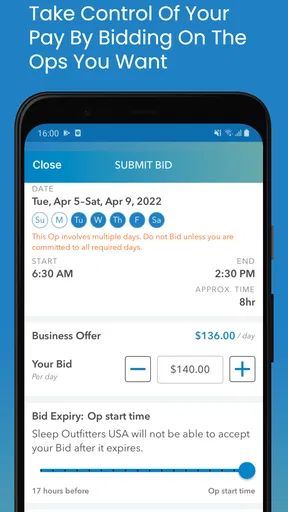
- See pay rates and job details before accepting an offer.
- Next-day payment can improve short-term cash flow.
- Useful for finding warehouse and fulfillment center work.
- In-app shift information helps reduce surprises on arrival.
Cons
- Available shifts depend heavily on your location and local demand.
- Some jobs may require transportation to industrial areas.
- Work availability and income can vary from week to week.
- Eligibility requirements may differ for each posted shift.
- Last-minute cancellations could disrupt your planned earnings.
FAQs for Veryable: Work. Next Day Pay
What is Veryable: Work. Next Day Pay?
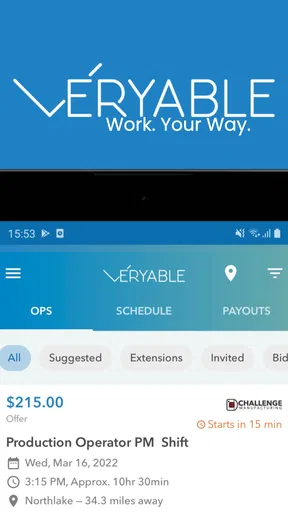
Veryable is a work marketplace app that connects businesses with people looking for short-term, flexible work opportunities, often called “opps.” Available assignments may include warehouse operations, manufacturing, logistics, picking, packing, loading, and other on-site tasks. After creating a profile, users can browse available opportunities, review the schedule and pay, and submit offers for assignments that match their skills and availability.
How does payment work in Veryable, and is next-day pay guaranteed?
Veryable promotes fast payment for completed work, but the exact timing can depend on the assignment, successful verification of attendance and completion, the payment method selected, and the app’s current policies. Before accepting an opportunity, review its compensation and payment details carefully. Next-day payment should not be assumed for every situation, especially if there are disputes, missing check-in information, canceled assignments, or processing delays.
What kind of jobs can I find on the Veryable app?
The opportunities listed in Veryable vary by location and local business demand. Common examples include warehouse associate work, order picking, packing, material handling, inventory support, production assistance, loading and unloading, and logistics-related tasks. Some assignments may require previous experience, specific equipment knowledge, safety training, or physical activity, so read the complete listing and requirements before making an offer.
What do I need to use Veryable and apply for opportunities?
You generally need a compatible Android or iOS device, an internet connection, and an account containing accurate personal and work information. Depending on the opportunity and your location, the platform may request identity verification, work eligibility details, payment information, certifications, or other onboarding documents. You should also keep notifications enabled because assignments can become unavailable quickly and may require timely confirmation.
Is Veryable available everywhere, and is it suitable for full-time employment?
Veryable availability depends heavily on the markets served by the platform, so users should check whether opportunities appear in their area before completing the full signup process. The app is primarily designed for flexible, on-demand assignments rather than guaranteed full-time employment. Work volume, schedules, earnings, and assignment types can change from day to day, making it better suited to people seeking temporary or supplemental income.


